

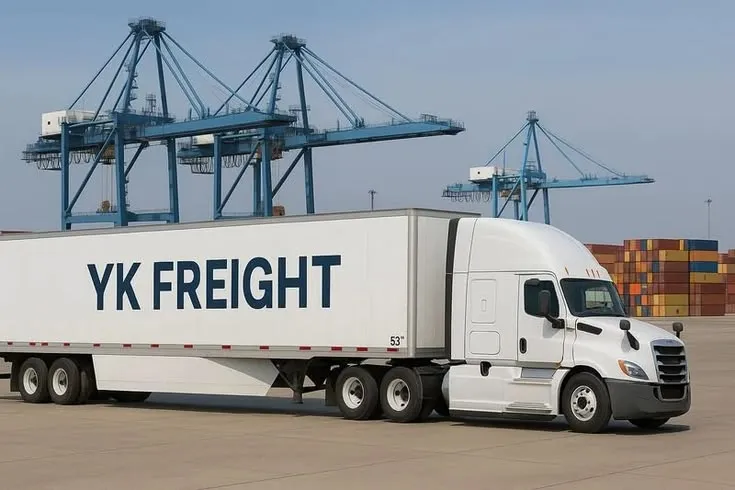
Businesses that transport containers in Atlanta sometimes require transportation from one terminal to another, as well as to and from warehouses, distribution centers, and other businesses. Drayage is just this component of an overall freight system. When handling imported merchandise, exported products, or intermodal shipments, businesses should be familiar with the drayage choices to help streamline their transportation planning. The appropriate one(s) will vary by container needs, facility time requirements, transportation needs, and the need for multiple parties to coordinate with each other.
What Drayage Means
Drayage Atlanta normally refers to the transportation of product containers on shorter routes between transport points. A container can be picked up from a rail terminal or other location and delivered to a warehouse or distribution center.
The travel distance may be less than for a standard long-haul delivery, but it’s still important to plan carefully. The process can be impacted by pickup appointments, container information, accessing the facility, delivery windows and the documentation.
In this regard, drayage is a linkage that is part of a supply chain.
Understanding Intermodal Connections
Intermodal drayage Atlanta links various modes of transport in the movement of goods. A container may be transported by rail for some portion of its trip and by truck for the last leg of the trip to an inland facility. A container could be carried by rail for part of the trip and then carried by truck to an inland facility.
It may be helpful for companies that have several modes of transportation involved in their supply chain. The truck side offers an option to get containers to places not directly connected to rail lines.
It is crucial for businesses to know where the drayage segment starts and ends before they arrange the transportation.
When Atlanta Businesses Use Drayage
Drayage will be needed to transfer containers from transport terminals to warehouses or distribution centers by the importer. Similarly, when raw materials or components arrive in containers, the manufacturers can utilize the same services.
Container movements can be required for retail and distribution operations as well when goods are brought into an Atlanta facility.
This varies by company, based on their supply chain. For some businesses, it may be a container move every so often, or they may require assistance with moving containers on a more regular basis.
Prepare Container Information
Before a container movement is scheduled, there should be accurate information. The information to be included in the container number is the business name, pick-up place, delivery address, expected pick-up time, etc., and the relevant cargo information should be included.
Weight information may be relevant in planning transport too. Businesses should give the provider accurate figures, which would help the provider to understand the shipment requirements.
Any receiving instructions for the destination should also be provided prior to pickup if the destination provides them.
Check Facility Requirements
The operating procedure may vary from terminal to terminal, warehouse to warehouse and distribution facility to distribution facility in the Atlanta area. Some may need an appointment; others have pick up/delivery times.
The requirements should be confirmed by businesses prior to the commencement of transportation. Giving clear instructions helps to facilitate the movement of the container by the carrier and also helps facility personnel prepare the container.
If items are being shipped again, it might be easier to schedule future shipments for the same locations with standard instructions.
Evaluate Transportation Providers
Some of the factors that businesses should consider when comparing drayage providers include geographic coverage, availability of equipment, communication, scheduling and experience with similar container movements.
The provider who knows the terminal and facilities may be able to know the common procedures easily. This can be helpful in certain situations that have multiple modes of transportation.
Also, communication should be taken into account. Changes to the plan might include the availability of containers, pickup times, delivery appointments and more.
Think About the Complete Shipment
The “drayage” should be coordinated with the entire freight trip. It’s important for businesses to know the steps that take place before the container arrives at the pickup location and the steps that take place at the delivery facility.
For instance, a box could have to journey from a rail terminal to a warehouse ahead of unloading. The empty container might have to be returned separately. Businesses can prevent disruptions in the various modes of transport by planning these together.
Improve Recurring Operations
Having uniform containers means that companies can benefit from uniform transportation procedures. Recurring loads could be easier to coordinate with standardized shipment data, instructions for the facilities and communication.
When the amount of freight or the facilities change, businesses should also analyze their transportation process. Changes in warehouses, customers or distribution requirements may present new drayage requirements. Having a flexible process gives businesses the option to make adjustments to transportation plans as their business grows.
Conclusion
Drayage can serve as a critical link between the terminals, warehouses, distribution centers and other businesses located in Atlanta. These moves can be a lot smoother to manage if businesses make sure that they have accurate container information, know what facilities are needed, schedule out the moves correctly, and select moving companies that have experience that fits the business’s needs. Additionally, drayage can play a crucial role in supply chain planning when viewed in conjunction with other intermodal connections. For companies looking to investigate freight and container transportation solutions, you can check out ykfreight.com for more details on the services that are offered for freight and container requirements.